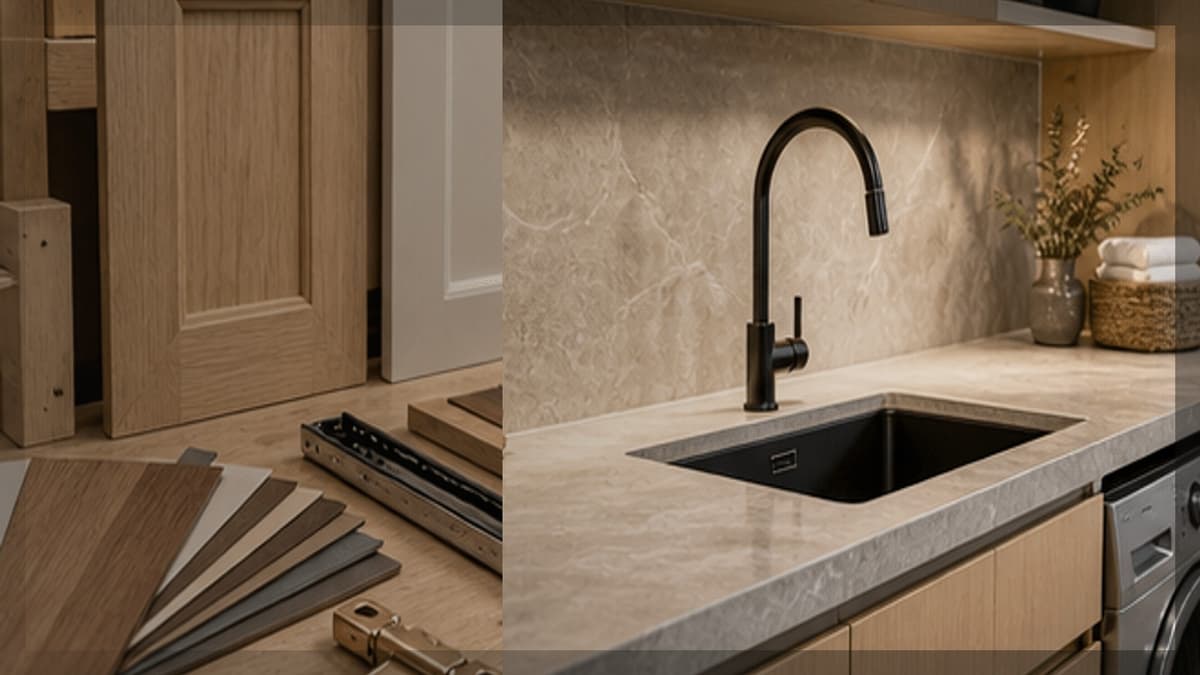
“Custom kitchen cabinets from China for apartment project” is a high-intent search because the buyer usually has drawings, quantity and a budget gap to solve.
The opportunity is real, but cabinetry has more coordination risk than a standard product. Success depends on drawings, door samples, hardware selection, finish control, packing and unit-by-unit labelling.
Start from drawings and room types
Factories need floor plans, elevations, appliance locations, ceiling heights, service zones and room-type quantities. If drawings are incomplete, the quote may be fast but not buildable.
For multi-unit projects, group kitchens by type. This reduces pricing confusion and makes production, labelling and installation sequencing easier.
Confirm materials and hardware early
Cabinet cost can change significantly based on board type, moisture resistance, door finish, edge banding, hinge, drawer runner, handle and benchtop interface. Buyers should confirm these before comparing factory quotes.
- Door finish sample and edge banding sample.
- Hinge and drawer runner brand or performance level.
- Packing method, carton marks and unit labels.
- Spare doors, panels and hardware for site damage.
Mock-up before mass production
A sample door is useful, but a small mock-up is better when the project has many repeated units. It lets the buyer check colour, handle position, drawer operation, gaps and compatibility with appliances.
Approval should be documented with photos and labelled samples. This reduces subjective arguments after mass production starts.
Container planning for cabinets
Cabinets are bulky and can be damaged by compression. The loading plan should separate fragile doors, long panels, benchtops and hardware. Unit labels should match the site schedule so the receiving team is not sorting hundreds of cartons blindly.
Next step
If you have kitchen drawings or room schedules, My Building List can help prepare a supplier comparison, sample plan and project loading strategy before production.
How to Compare a Kitchen Cabinet Supplier in China
A kitchen cabinet supplier in China should be evaluated on drawing control, material disclosure, finish consistency, hardware, production capacity and packaging, not only a price per linear metre. Provide room plans, elevations, appliance data, service locations and a written finishes schedule.
Lock the Shop Drawings and Hardware Schedule
Approve cabinet dimensions, fillers, panels, toe kicks, cut-outs and opening directions before production. Record board substrate, visible finish, edge treatment, internal colour, hinges, runners, handles and accessories by item code. Substitutions should require written approval.
Use a Mock-Up for Repeated Apartment Types
For apartment projects, a complete sample kitchen or representative cabinet set can expose drawing, colour and installation issues before mass production. Confirm how units will be labelled, bundled and loaded so installers can identify each room package on site.
What should be inspected before cabinet shipment?
Check dimensions against approved drawings, finish and edge consistency, drilling, hardware operation, loose components, carton labels and moisture protection. Review related joinery and finish categories or send the cabinet schedule.
Joinery Package Inputs for Developers
Custom kitchen and joinery quotes need drawings, cabinet schedule, board specification, door finish, edge detail, countertop interface, hardware range, appliance cutouts and installation sequence. A lower cabinet quote may exclude hinges, runners, handles, fillers, panels, packaging or drawing revision work.
For apartments and hotels, request a sample door, hardware confirmation and packing labels by unit or room type before approving bulk production.