Short answer
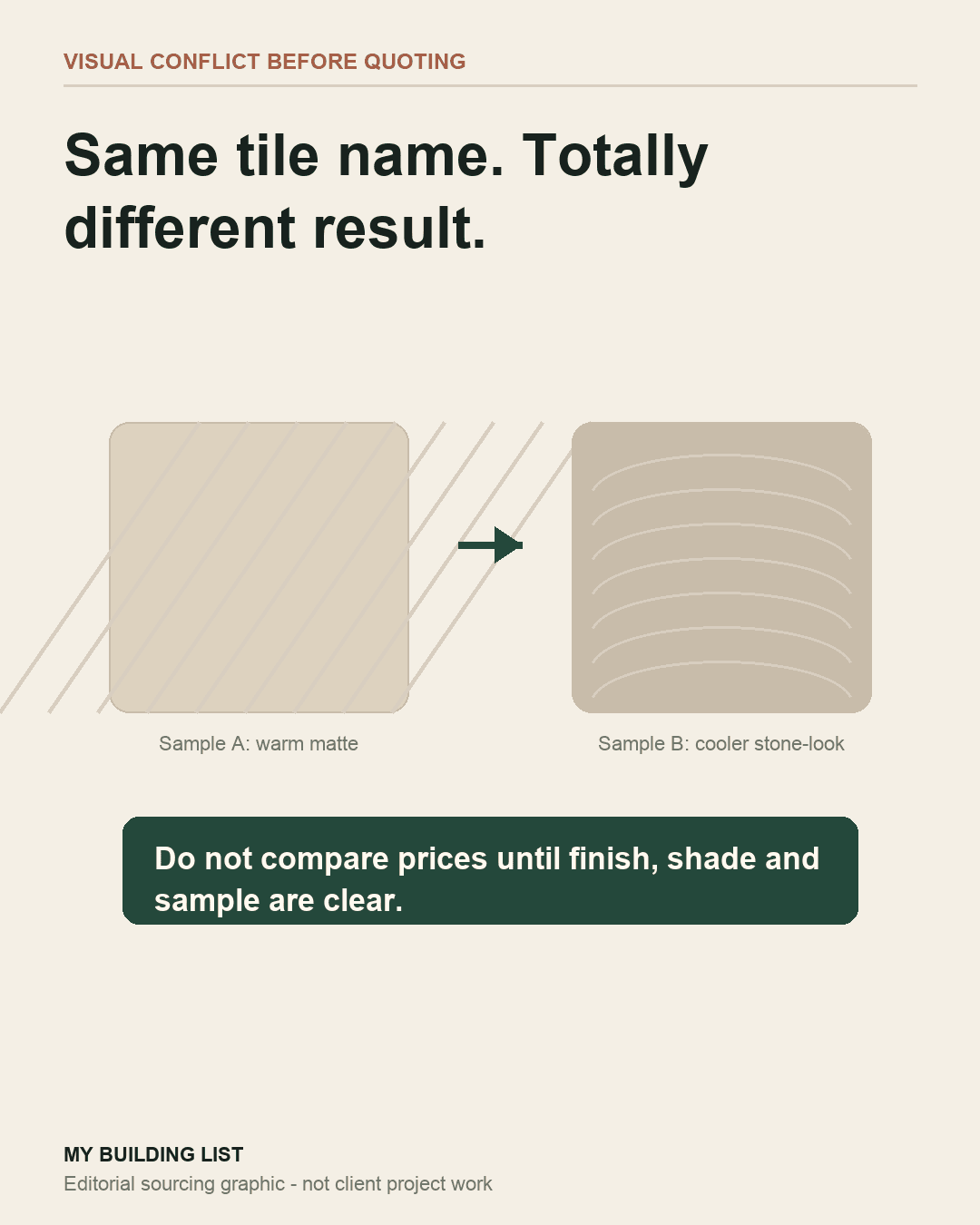
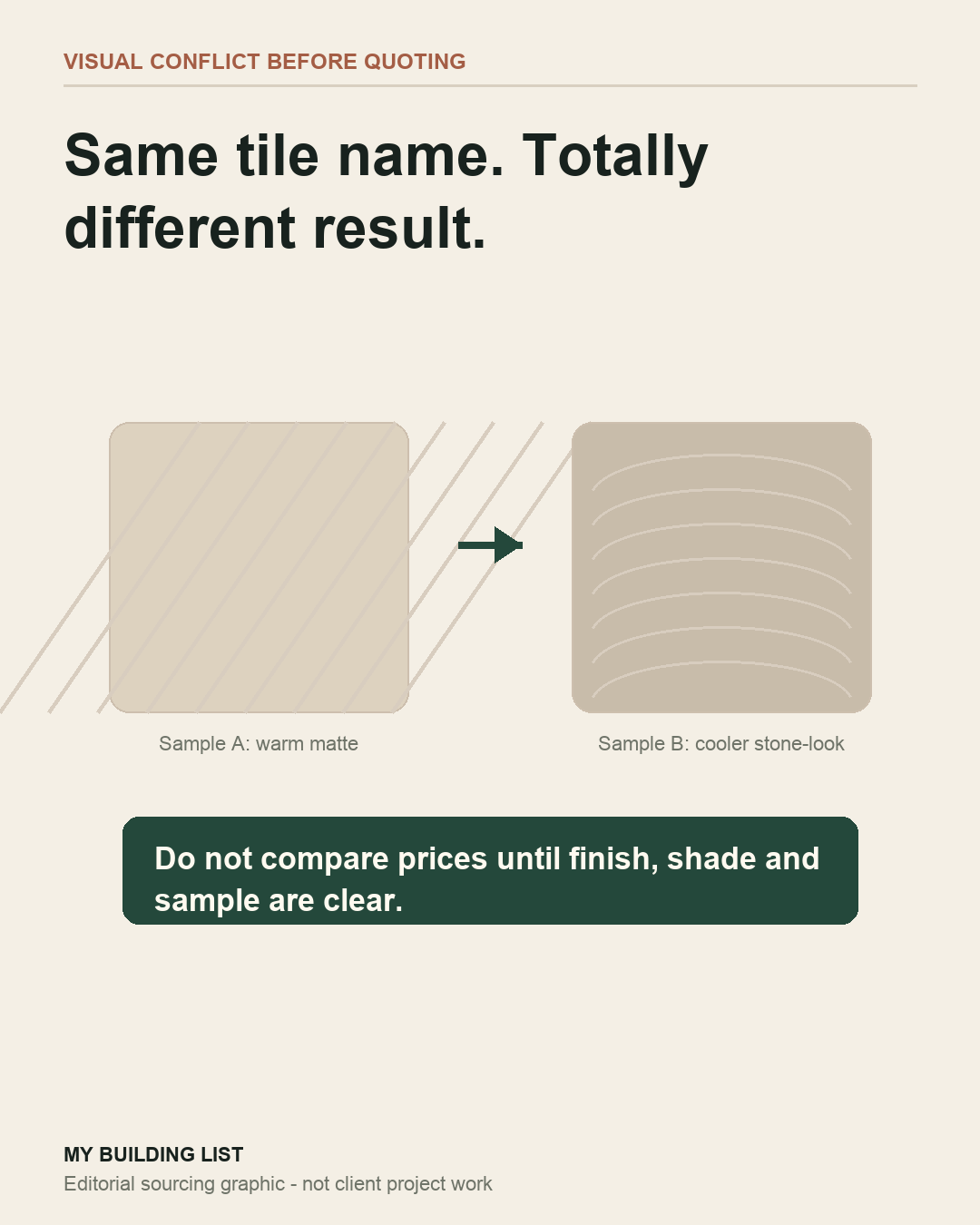
Two porcelain tile suppliers can quote the same product name and still be pricing different assumptions.
For project buyers, "600 x 1200 porcelain tile" is not enough information to compare suppliers. The project team also needs to check finish, shade range, calibre tolerance, sample source, packing, carton marks, quote basis, delivery assumptions and pre-shipment evidence.
The goal is not to make sourcing complicated. The goal is to avoid comparing two incomplete scopes.
Editorial sourcing graphic - not client project work.
Why this matters
Tile problems are often noticed visually:
the installed tone feels different from the approved sample
one batch looks warmer or cooler than expected
replacement cartons are difficult to match
the site team cannot identify cartons quickly
packing damage creates arguments after arrival
Those problems usually start before shipment. The buying brief did not make the assumptions clear enough.
What the product name does not tell you
A short tile description may hide details such as:
matte, polished, textured or anti-slip finish
color tone and shade range
calibre or size tolerance
edge detail and thickness
current production vs showroom sample
export carton quality
palletization and carton marks
EXW, FOB, CIF or other quote basis
replacement and shortage handling
The lower quote may simply be missing a cost or control point. The higher quote may include more scope. The buyer cannot know until the assumptions are visible.
Checks before comparing tile suppliers
Before treating two tile quotes as comparable, prepare or request:
tile size, finish and intended use area
estimated quantity and overage basis
approved sample or sample board reference
shade range expectation
calibre or tolerance expectation
packing unit and carton mark requirements
destination country or port
quote basis and freight assumptions
delivery window
pre-shipment photo or inspection scope
If the project does not have all inputs yet, separate early budget signals from supplier comparison. A budget number can be useful, but it should not be treated as a final supplier decision.
Sample control
A sample is not only a design detail. It is a procurement control point.
For project orders, the sample record should connect to:
finish code
color or surface name
batch or shade note when relevant
approval date
quote reference
production evidence before shipment
If the sample cannot be tied back to the quote and QC checklist, it gives the buyer less control than it appears to.
Packing and receiving control
Packing can decide whether a tile order is easy or painful to receive.
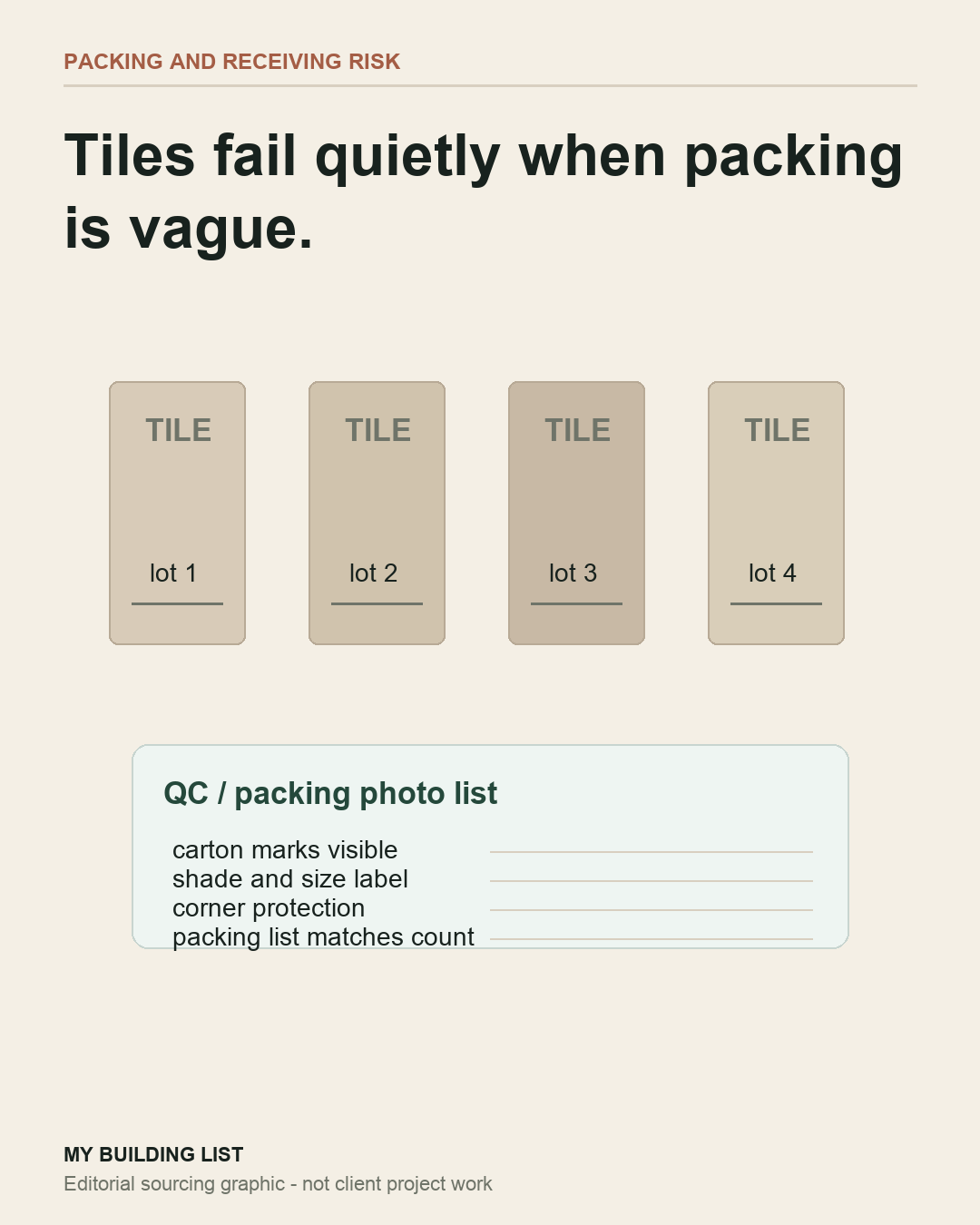
Before shipment, define what the buyer wants to see:
carton marks visible
shade and size labels visible
quantity checked against packing list
corner and surface protection
pallet condition
mixed-lot separation if applicable
Editorial sourcing graphic - not client project work.
This matters most for apartment, hotel, hospitality and commercial fitout packages where different areas may use similar but not identical tiles.
Buyer-fit filter
China sourcing may make sense when:
the order is project-scale
drawings, BOQ or tile schedule are available
the destination country or port is known
timeline allows sample review and shipment
the project team can review local requirements with relevant professionals
It may not be the right fit when:
the order is one box or one room
the buyer only wants the lowest retail price
no size, quantity, destination or timing is available
the timeline is too urgent for sampling and shipment
How My Building List can help
My Building List helps project buyers turn tile schedules, drawings and BOQs into clearer factory briefs before supplier comparison.
For project orders, send:
product category
tile size and finish direction
estimated quantity
destination country or port
drawings, BOQ or tile schedule if available
sample requirement
delivery window
Website: https://www.mybuildinglist.com
FAQ
Why can the same tile name produce different results?
Because the product name may not lock finish, shade range, calibre tolerance, sample source, packing or quote basis.
Should I compare tile price first?
No. First check whether the suppliers are quoting the same specification and scope. Price comparison is useful only after assumptions are visible.
Is China sourcing suitable for a small tile order?
Often not. Small one-room or one-box orders may not justify sampling, QC and shipment coordination.
Can My Building List guarantee local compliance?
No. My Building List can help organize supplier information and documentation inputs. Destination-market requirements should be reviewed by the buyer and relevant local professionals.
Separate Product Comparison From Supplier Selection
This checklist answers whether two porcelain-tile offers describe the same product. Supplier selection is a second decision covering factory capability, communication, sample traceability, QC and replacement support. Use both decisions before awarding a project order.
Create a Tile Comparison Record
For each offer, record product code, dimensions, thickness, finish, rectification, shade range, calibre basis, carton coverage, pieces per carton, pallet details, sample date and quote validity. Attach the approved sample reference so later production checks use the same benchmark.
Link Receiving Checks Back to the BOQ
Carton marks, quantities and pallet labels should match the purchase order and room or area schedule. Define how visible damage, shade concerns and shortages will be recorded on arrival, including the evidence required for a supplier claim.
Where can buyers assess supplier capability?
Use the separate porcelain tile supplier and QC guide. For a project comparison, send the tile schedule, reference images and destination.